AESTHESYS for Teams · Level 2
Contact Practice for Teams
Initiative, responsiveness, and meeting the Other
Offer a direction. Notice the response. Find the next move.
The AESTHESYS corporate programmes are built as a sequential path. Contact Practice (Level 2) is available after completing the full TEA programme. Completing the previous level is required before moving to the next.
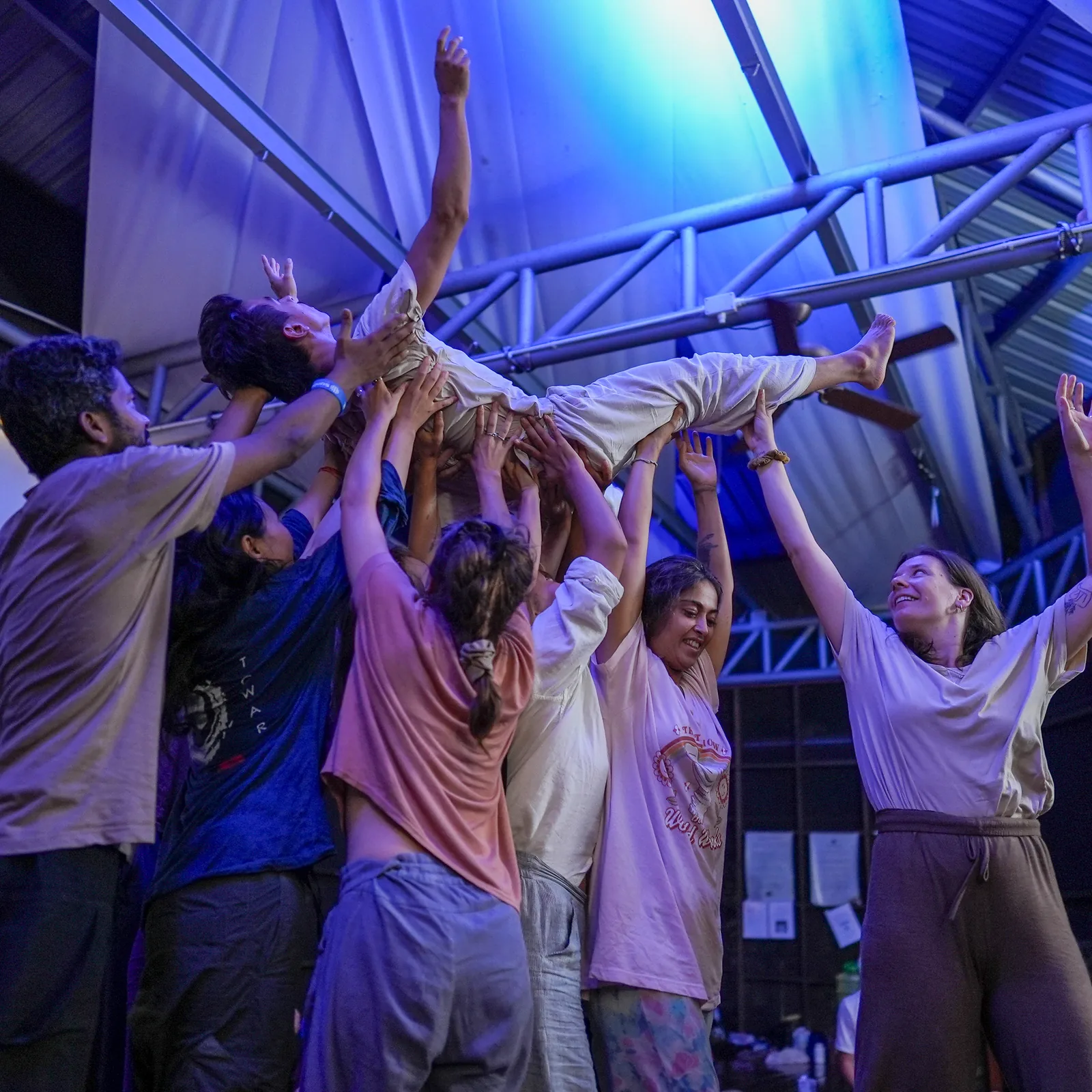
Learning to act with the Other
TEA Practice develops attention to your own experience within a shared setting. Contact Practice brings the physical interaction between people to the centre: touch, shared weight, initiative and response.
Another person has their own weight, momentum, intentions and timing. They are not an extension of your will. You offer a direction, meet their response and discover how the next move takes shape between you.
Drawing on Contact Improvisation, the programme makes these interactions tangible: how you take initiative, offer and receive support, negotiate boundaries and act together when neither person has the full script.
Movement keeps its own value — play, surprise, physical grounding and the pleasure of shared action — while sharpening your fundamental capacity to interact with others in work and life.
When this is useful for a team
Moving from personal attention to direct interaction
Having completed TEA Practice, your team wants to work directly with how people meet, offer a direction and adapt when another person moves differently than expected.
Experiencing initiative, support and boundaries
Leads and team members want a tangible way to explore how they offer direction, ask for or receive support, set boundaries and stay active in shared work.
Relating to AI and other agents
Experiencing how you handle unpredictability, friction and shared direction in the body changes how you approach dialogue and delegation with AI.
Interaction you can notice as it happens
You do not need a dance background or special athletic preparation. The tasks are adapted to the group and build progressively from simple to more dynamic forms of movement.
The work begins with your own weight, the floor and the space, and then moves into working through a physical point of contact with a partner and the group. Together, participants explore:
- Offering a clear physical direction and noticing how the other person responds.
- Giving and receiving weight without holding on to unnecessary effort.
- Changing distance, pace, momentum or direction on the fly.
- Stopping and closing an interaction cleanly while keeping support for both people.
Encountering the Other: from movement to AI
You bring your familiar ways of meeting others into physical contact: taking initiative, holding back, following, asking for support, setting boundaries or trying to carry the whole exchange.
In movement, these patterns become tangible. You can feel when you push past a response, when you leave your own direction unexpressed and when shared support opens a new possibility.
The workshop gives you room to recognise these habits and practise changing how you act: leading clearly, following actively, offering and receiving support, and ending an interaction. These are choices you carry into how you work and live with others.
In the final part of the programme, we bring this experience to real situations from your work: meeting a counter-proposal, responding to an unexpected result, giving direction, receiving support and deciding when to continue, change course or stop.
A human partner brings their own intentions and boundaries. An AI system introduces a different kind of interaction, with different possibilities and limits. We work with both while keeping you involved in choosing your next move.
Programme structure (15-Hour Workshop)
The core workshop consists of five 3-hour parts. It can be scheduled across a long weekend (Friday to Sunday) or adapted to dates agreed with the participating company or companies.
Part 1 · 3 hours
Own support
Attention to weight, skeletal support, the floor and shared space; establishing a grounded physical baseline before meeting a partner.
Part 2 · 3 hours
Meeting the Other
Entering physical contact, reading a partner’s response, and practising clear ways of initiating, continuing or stepping out of an interaction.
Part 3 · 3 hours
Weight, support and adaptation
Working with shared weight, pressure, momentum and direction; staying stable and responsive when the situation shifts unexpectedly.
Part 4 · 3 hours
Initiative in shared movement
Transitioning between leading and following in pairs and the wider group; offering a new direction, meeting resistance and finding a shared move.
Part 5 · 3 hours
Integration: people, work and AI
Connected movement practice followed by structured reflection on the patterns of interaction that became visible during the workshop. We bring these into real situations involving colleagues, clients and AI: taking initiative, responding to a different direction, giving and receiving support, and changing how we act.
Multi-team cohorts: combining teams at Levels 2 & 3
While Level 1 (TEA Practice) is held in groups of up to 8 people, Level 2 (Contact) and Level 3 (Mute) benefit from a larger room and a wider variety of partners.
Single company or combined teams
You can run the programme for a single company (up to 25 people) or combine several teams that have completed Level 1 into one workshop.
Shared cost
Participating companies can split the programme fee and venue costs; the specific breakdown is confirmed in the written proposal.
Moving to Level 3
Mute Practice, Level 3, is designed for groups of 25–75 participants who have completed Level 2. Graduates from several Contact programmes can come together in one cohort.
Formats and fees
All formats are conducted in person for groups of up to 25 participants (for a single company or combined teams that have completed Level 1).
| Format | Duration | Fee (per group of up to 25) |
|---|---|---|
| Introductory Session | 3 hours | €400 |
| Workshop | 15 hours (five parts of three hours) | €3,000 |
| Week-Long Retreat | 40 hours (Monday–Sunday) | €4,000 |
- Introductory Session: The introductory session is a standalone meeting. Its fee and hours are not credited toward the full programme.
- Additional expenses: Venue hire is additional. For residential programmes, accommodation and meals are additional. The written proposal confirms the schedule, delivery and cost-sharing arrangements, applicable taxes and any agreed travel expenses.
The facilitator
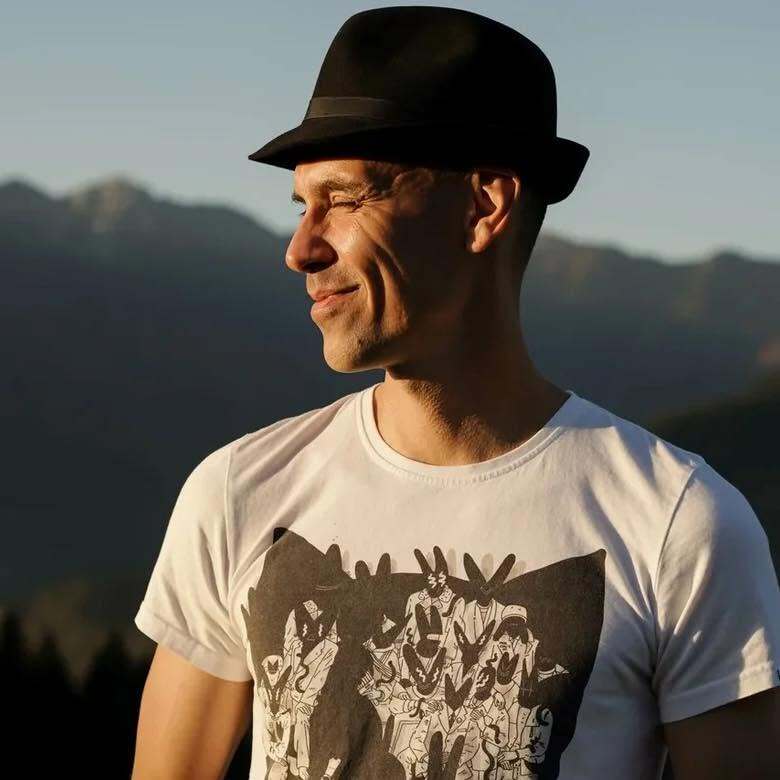
Yevhen Vovk (Yu Gen)
Author of AESTHESYS. I have taught contact improvisation since 2015, practised tea ceremony since 2003, and built physical spaces and international events. My work connects movement and sensory practice with the philosophy of action and an active exploration of AI.
Here the centre of the work is movement, physical interaction and facilitating the group process, building on the foundation established in TEA Practice.
Questions
Can we book Contact Practice directly without doing TEA Practice first?
No. Contact Practice is available after completing the full TEA programme. Mute Practice is available after completing the 15-hour Contact workshop or the 40-hour retreat. Introductory sessions are standalone experiences and do not count as completion of a level.
Is physical touch required?
Physical touch, shared weight and movement with a partner are the core of Contact Practice. Participation in each exercise is voluntary. You can decline contact, choose a different partner, pause or remain an observer without having to explain why.
Do we need dance experience?
No. The programme does not require a dance background. Exercises progress naturally and are adapted to the group.
How does combining teams work?
Several teams that have completed Level 1 can join together for a Contact programme (up to 25 participants total). Companies can share the programme fee and venue costs, with the exact split fixed in the written proposal.
How do the 15-hour workshop and the 40-hour week-long retreat differ?
Both explore the same core themes. The 15-hour workshop consists of five 3-hour parts (for example, Friday to Sunday or across agreed dates). The 40-hour retreat runs Monday to Sunday, giving the group a full week for deeper repetition, movement practice, rest and reflection.
How does this carry over into work and AI?
Your familiar ways of meeting others show up directly in physical contact — how you initiate, hold back, follow, set boundaries or handle friction. Recognising these patterns and practising other choices in movement carries directly into how you act with colleagues and clients, and how you approach dialogue, unexpected outputs and delegation with AI.
The sequential path for teams
AESTHESYS for Teams · Level 2
Discuss a programme for your team
Tell me about your team and the question you want to work with.