What practice organises
The Foundation describes practice as consciously organised transistence. Transistence names the direction of becoming here and now; practice does not create becoming from nothing. It organises conditions in which aspects of an ongoing process can become discernible.
A familiar action may already contain precise distinctions without requiring verbal commentary. Practice can unfold that action for learning, then allow it to become a skill again. Its purpose is not permanent self-monitoring.
A working model of participation
Notice. Something becomes apparent, including a possible mismatch between a familiar response and the situation.
Pause. Automatic continuation becomes interruptible. A visible stop may help in learning, but the distinction does not require a fixed duration.
Orient. Attend to the situation: one’s position, relevant conditions, the other participants and what may be possible.
Discern. Make differences and possible continuations available. Discernment may be bodily and wordless.
Choose. Weigh what matters and determine a move. Weighing belongs within this step in the practical formulation.
Act. Carry out the move, including proportionate restraint where appropriate. Its consequence becomes part of the next situation.
Notice → Pause → Orient → Discern → Choose → Act
The expanded philosophical loop also names situation, contact, weighing and consequence. These are two levels of description of the same model. The six terms are not a test, a score or a rigid recipe; in skilled action their processes may overlap.
Attention, listening and touch
Attention can turn from isolated inner monitoring toward the whole accessible situation. A vessel’s weight, the timing of another person’s movement and the effect of one’s own words can all matter.
Listening involves allowing a response to enter the conditions of the next move. In contact this includes the possibility that another person wants something different, cannot continue, or chooses to stop. An elegant or fluid interaction does not establish agreement.
Touch makes another body a material fact of the situation. It does not reveal that person’s experience from within. Attentive touch, consent and the interpretation of a response remain distinct questions.
Reflection and skill
The learning cycle can be described as action → reflection → reconstruction → renewed practice. Reflection makes the action discussable and revisable. This need not mean explaining every movement while it occurs.
Automatism is part of learning. A skilled action frees attention. The problem arises when the established form continues after the conditions that made it appropriate have changed. A practice needs to remain open to revision too.
Instruments, supports and transfer
Some means are instruments whose value continues with use. Others are supports intended to make a capacity available beyond the original learning situation. A piano need not disappear from a musician’s life. A facilitator should not become the only condition under which a participant can exercise a capacity intended to transfer.
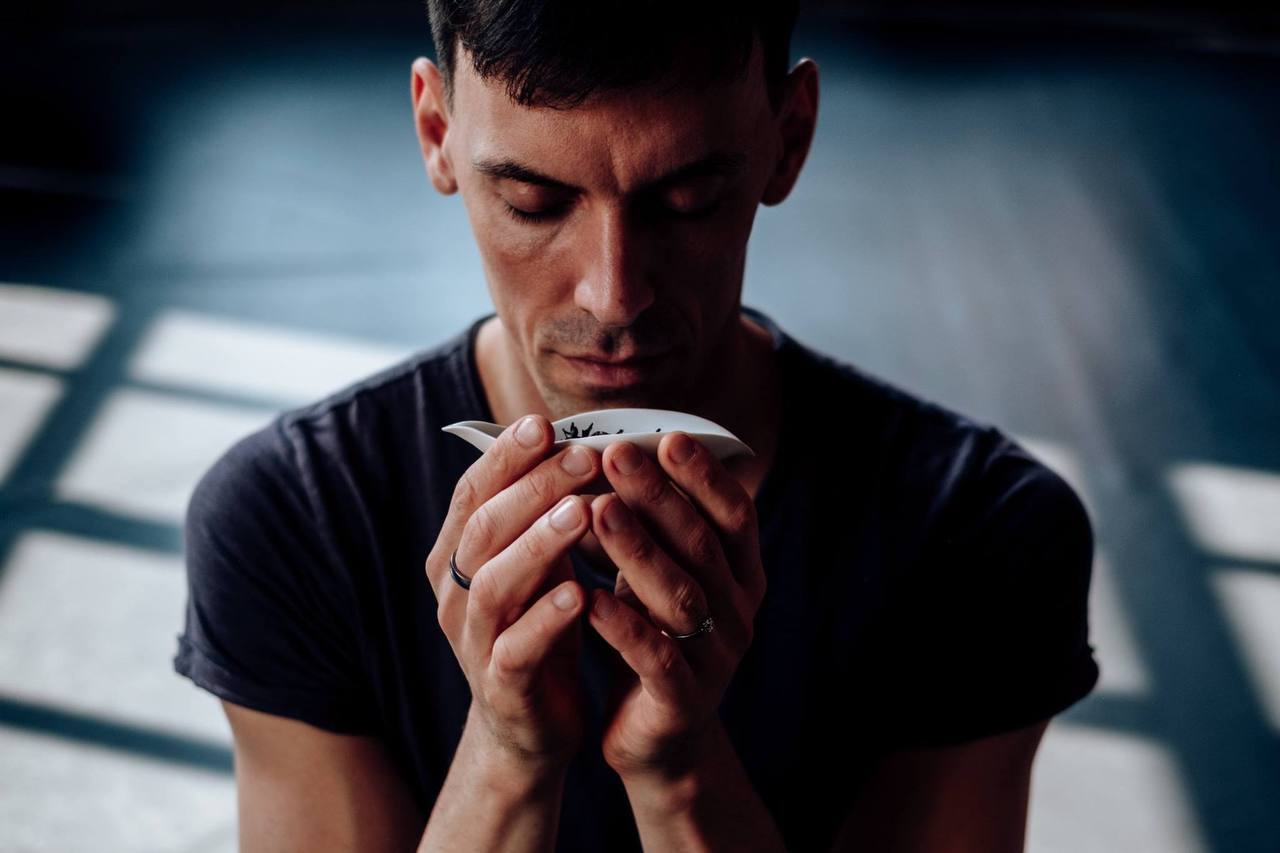
Tea can have both roles: a cultural art worth continuing and a material setting for exploring discernment. Whether a particular capacity becomes available elsewhere is an empirical question. Success within a session does not answer it.
Education and the School
The educational direction of AESTHESYS concerns learning, reflecting on and transmitting the method. It requires explicit distinctions between participation for oneself and preparation to facilitate others.
AESTHESYS School is an educational prospect for developing and transmitting the method. The pedagogical sequences of Tea, Contact and Mute require their own development; a complete curriculum or certification is not yet offered.