
Tea
The material changes as we work with it. Taste, temperature, aroma, weight and timing can become part of a concrete relation between perception and action. Tea also carries its own history, craft and social forms.
The question is how differences become available without withdrawing from participation. Read Tea.
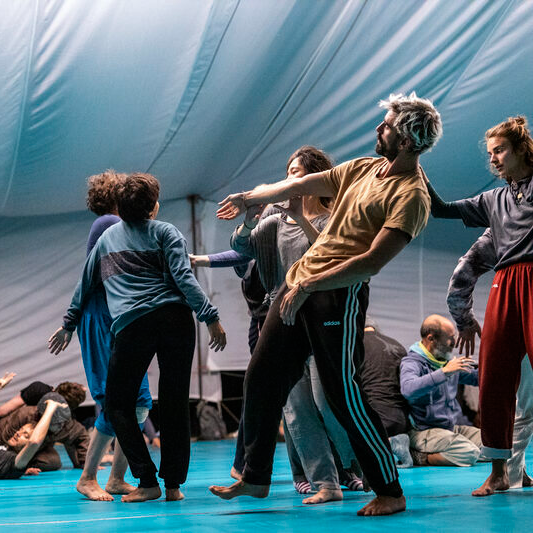
Contact
Another source of conditions enters the next move. In work with a partner, support, pressure, distance, initiative and boundaries take practical form. Each person can change their own participation while the other’s response remains open.
The question is how to act within mutual influence while preserving the other person’s agency. Read Contact.

Mute
Active interaction continues while habitual speech is temporarily restricted. The change makes familiar means of explanation and coordination available for inquiry. New signs or ways of acting may emerge; misunderstanding may emerge too.
The question is what happens to participation when a familiar means of organising it is changed. Read Mute.
An experience within one practice cannot establish the effects of all three. Transfer into a different task or everyday setting is a separate question. The research programme describes how such questions can be investigated.